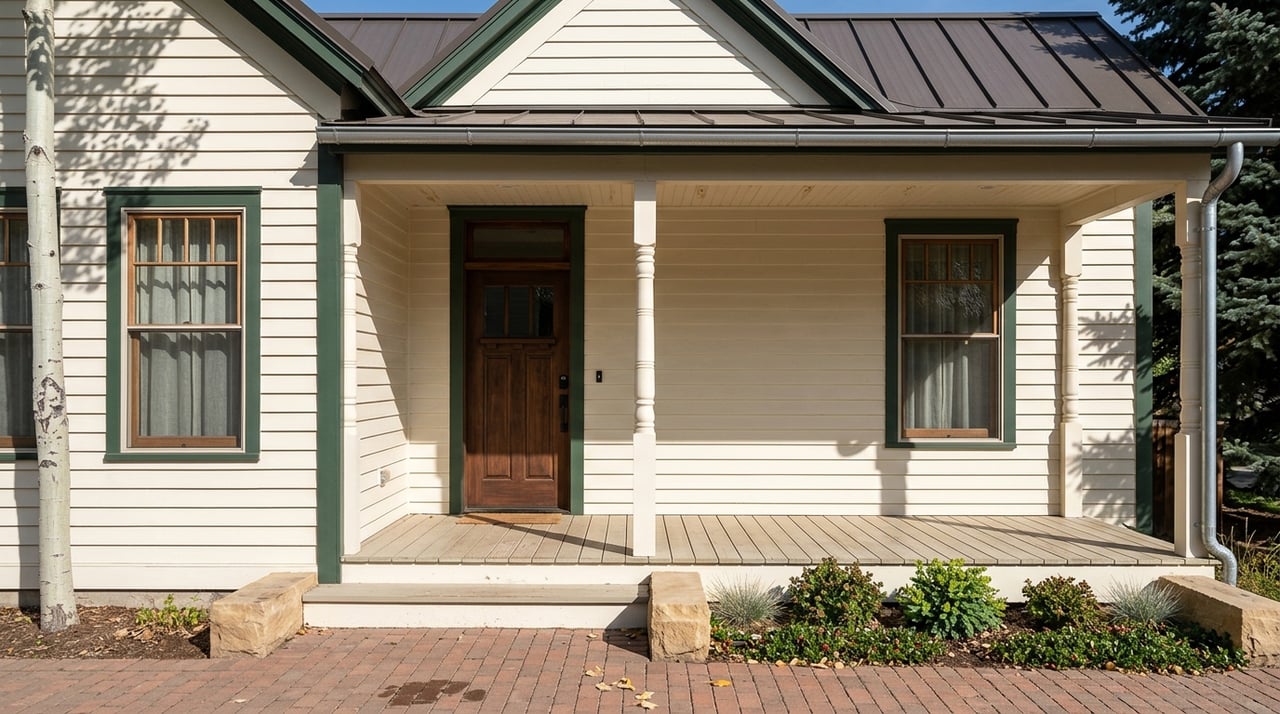
If you are home shopping in Ouray, one question tends to come up fast: do you want historic character or the easier upkeep that often comes with a newer home? In a town this distinctive, that choice is about more than style alone. It can shape how you live in the home, maintain it through snowy winters, and use it as either a full-time residence or a second-home retreat. This guide will help you compare both paths so you can tour with more confidence and decide what fits your goals best. Let’s dive in.
Why home styles vary in Ouray
Ouray’s housing stock looks different from many mountain towns for a reason. According to the City of Ouray Community Plan, the Ouray Historic District was established in 1983, covers almost the entire historic townsite, and includes many older buildings that survived because the city did not experience large fires within town.
That historic continuity is a major part of what gives Ouray its visual identity today. The National Register documentation describes the district as a late-19th-century mining town that evolved from a frame-dominated camp into a brick-and-stone city, with architectural significance spanning roughly 1886 to 1915.
At the same time, newer housing exists outside the historic core and in more contemporary residential patterns. The city plan also notes that building new housing can be challenging in the area because of dramatic elevation changes, which helps explain why the inventory can feel limited and varied.
What historic homes offer
Historic homes in Ouray often appeal to buyers who want architecture, setting, and a tangible connection to the town’s past. In practical terms, that can mean original details, older materials, smaller room layouts, and a strong sense of place that is hard to recreate in newer construction.
The National Register nomination highlights late Victorian-era character, including Queen Anne and vernacular examples. If that kind of design matters to you, a historic home may feel more memorable and emotionally compelling than a newer property.
For some buyers, that charm is the whole point. You are not just buying square footage. You are buying into Ouray’s built history and the experience of living within it.
Historic-home tradeoffs
Historic homes usually require more hands-on stewardship. The National Park Service notes that preservation focuses on maintaining and repairing historic materials and features rather than replacing them whenever possible.
That means routine care matters. Roofs, gutters, downspouts, masonry, and window and door openings deserve close attention, especially in a cold, snowy mountain climate.
That climate is not minor and weather exposure is a real part of ownership planning in this region.
Energy updates in older homes
Older homes can often be improved for comfort and efficiency, but the process usually takes more planning. The U.S. Department of Energy notes that many older homes have less insulation than homes built today, and that air sealing, insulation, duct sealing, and heating equipment upgrades are common opportunities.
That said, not every improvement should be approached the same way in a historic property but insulating masonry and other historic assemblies without care can create moisture and freeze-thaw issues, so energy work often benefits from a specialist who understands both building science and historic materials.
What newer builds offer
Newer homes in Ouray can attract buyers who want less maintenance and potentially more functional floorplans. They are more likely to be found outside the historic townsite, where the community plan describes newer subdivisions and more contemporary residential development patterns.
From a practical standpoint, newer construction often means fewer immediate project items. Many major systems are newer, and the home is more likely to reflect modern expectations for insulation, ventilation, and overall performance.
That does not mean a newer home is maintenance-free. It usually means the maintenance timeline may feel more predictable, especially in the first years of ownership.
Why newer homes fit some buyers better
If you value a more current layout, easier winter shutdowns, and less specialized maintenance, a newer build may align better with your lifestyle. This can be especially important if you are buying from out of state, managing the property remotely, or planning to leave it vacant for stretches of time.
Historic vs newer at a glance
Both home styles can work well in Ouray, but they tend to serve different priorities.
| Feature | Historic Home | Newer Build |
|---|---|---|
| Character | Strong architectural identity and period detail | More contemporary design and finishes |
| Layout | Often smaller or more traditional floor plans | More likely to reflect current layout preferences |
| Maintenance | More ongoing stewardship and repair planning | Often fewer immediate repair projects |
| Energy upgrades | Usually possible, but may require careful planning | Often closer to current-era performance expectations |
| Best fit | Buyers who value charm and are comfortable with upkeep | Buyers who prioritize predictability and convenience |
Which style fits second-home use?
Ouray has a notable seasonal-use pattern. The Ouray County planning area profile reports that the City of Ouray had 42.5% vacant housing units, while a regional workforce-housing report cited in the same research found 38.8% of units were vacant or seasonal.
That matters if you are buying a second home. If you plan to use the property part-time, features like easy winterization, modern mechanical systems, better insulation, and simpler shutoff procedures may carry more weight.
In many cases, that leans buyers toward newer builds or historic homes that have already been carefully updated. A lightly updated historic property may still be a great fit, but it often works best for buyers who are prepared for periodic maintenance and active oversight.
Which style fits full-time living?
For full-time owners, a historic home can be deeply rewarding over time. If you enjoy caring for older architecture and making thoughtful upgrades gradually, that stewardship can preserve both comfort and historic value.
The City of Ouray Community Plan emphasizes maintaining historic character, scale, and mass, along with preserving and rehabilitating structures within the historic district. If you are drawn to that kind of long-term ownership experience, a historic home may feel especially meaningful.
A newer home, by contrast, may make more sense if your top priorities are ease, efficiency, and a more streamlined daily routine. Neither choice is better across the board. The better choice is the one that matches how you plan to live.
Questions to ask on tour
When you walk through homes in Ouray, the right questions can quickly reveal whether a property fits your goals.
Historic-home questions
- What year was the home built, and which features or areas are original?
- Has the roof been repaired or replaced recently?
- Are there signs of moisture intrusion, masonry wear, or freeze-thaw damage?
- What insulation, air sealing, or HVAC upgrades have already been completed?
- If you want to change windows, expand the home, or alter the exterior, what approvals may be required?
- Is there a regular plan for gutters, drainage, and winterization?
Newer-build questions
- What year was the home built, and what code or energy standard was it designed to meet?
- How old are the furnace, boiler, air conditioner, and water heater?
- What insulation levels and window packages were installed?
- How does the home handle snow load, freeze risk, and winter shutdowns?
- Are there HOA or subdivision rules that affect exterior changes, parking, or rentals?
- If the home will be used part-time, what systems support remote monitoring and seasonal maintenance?
One key question for any home
- If you leave the property vacant for part of the year, what is the owner’s checklist for winterization, leak prevention, and routine inspections?
How to make the right choice
If you are deciding between historic charm and newer convenience, start with your real lifestyle rather than your idealized one. Ask yourself how often you will be in town, how comfortable you are managing maintenance, and whether you want a home that feels turnkey or one that invites ongoing stewardship.
In Ouray, that distinction matters because the housing stock is genuinely varied. The city has a meaningful concentration of older homes in the town core, while newer inventory often serves buyers looking for a more modern ownership experience.
If you want guidance that goes beyond photos and surface impressions, working with a broker who understands the nuances of Ouray can help you compare properties more clearly. Whether you are looking for a second-home retreat, a full-time residence, or a property you can manage remotely, Amanda F Swain offers knowledgeable, concierge-level guidance across the San Juan Mountain region.