A buyer found the parcel he wanted on Specie Mesa last spring. Thirty-seven acres, mature aspen, a view of Little Cone that made the price feel almost reasonable. He ran the math on price per acre against three comparable mesa listings, made an offer, and opened escrow feeling like he understood exactly what he was buying.
Three weeks into due diligence, his title company came back with a question nobody had raised at the showing: who holds the water right, and was it conveyed with the deed. It hadn't been decided yet, because in Colorado it almost never is automatic. The seller's family had used the well for decades without ever formalizing the transfer, and the buyer spent the better part of a month with a water attorney sorting out what he actually owned before he could close with confidence.
That story is not unusual in this part of San Miguel County. It is close to the norm. Placerville real estate gets marketed on acreage and view, but the number that determines whether a parcel functions the way a buyer expects has almost nothing to do with either one.
One Median, Two Different Products
Ask for the median price on land around Placerville and you'll get an answer that sounds coherent and means very little. As of May 31, 2026, active listings across the area carried a median list price near $2,695,000, spread across roughly two dozen properties and ranging from about $325,000 to nearly $11 million. Raw land, tracked separately, has recently averaged a little over $6,000 an acre, while ranch-scale parcels have run closer to $4,200 an acre.
The spread exists because Placerville isn't one market wearing one price tag. It's two.
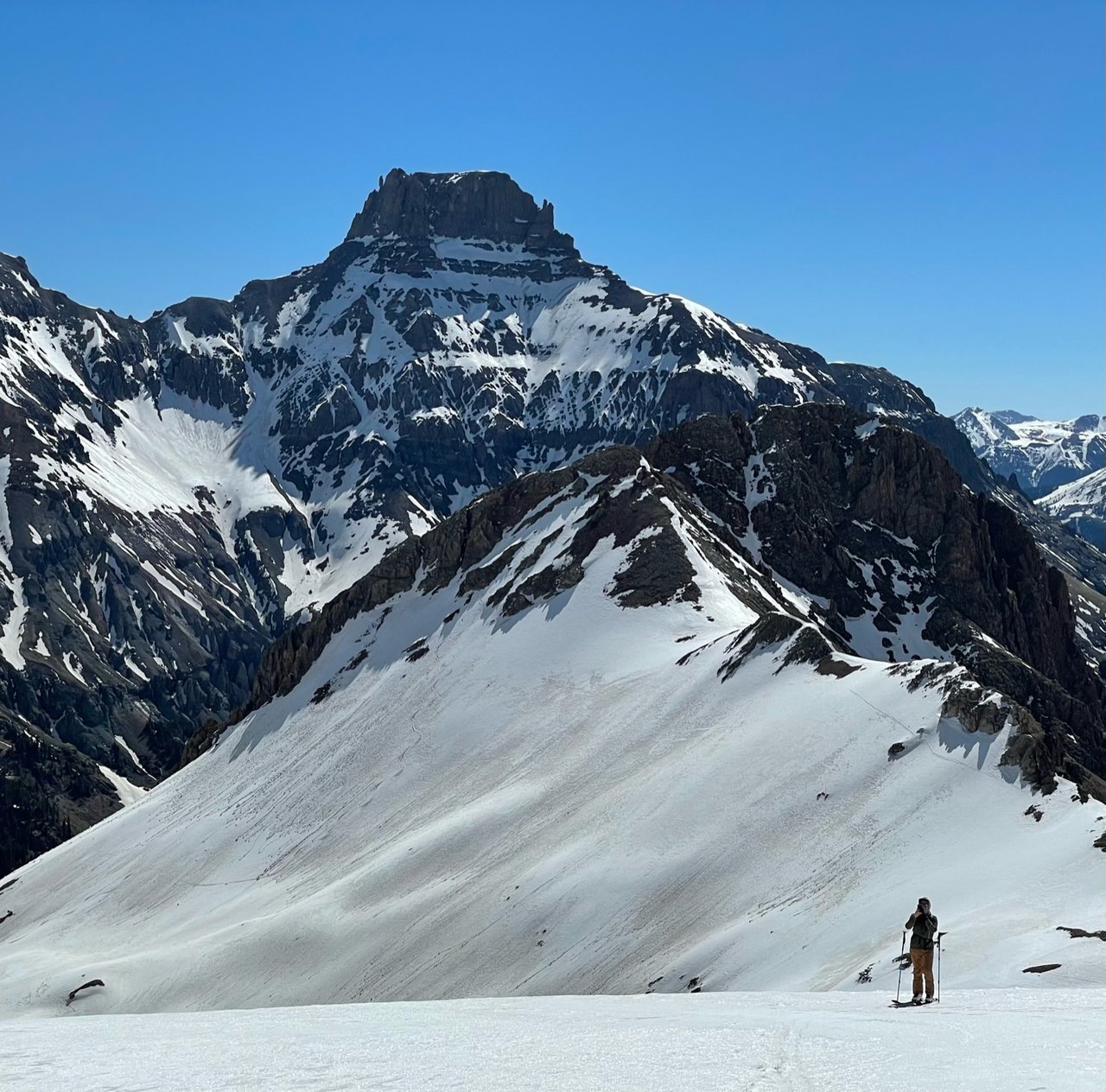
Head up onto the mesas above the river corridor, Specie Mesa, Iron Springs Mesa, Wilson Mesa, Hastings Mesa, and you're buying land in the 8,000 to 9,000 foot range. Winters are long, snow removal is a real line item, and the payoff is the view and the privacy that draw most buyers to this corner of Colorado in the first place. Drop into the river valley itself, along Brown Ranch Road or the Fall Creek Subdivision closer to town, and elevation falls to somewhere between 6,500 and 7,500 feet. Winters are milder, the growing season stretches longer, and San Miguel River frontage becomes a live option instead of a fantasy.
High Mesa (Specie, Iron Springs, Wilson, Hastings) | Down Valley Corridor (Brown Ranch Rd, Fall Creek) | |
|---|---|---|
Elevation | 8,000 to 9,000 ft | 6,500 to 7,500 ft |
Winter access | Often requires a snow removal plan | Generally maintained year-round |
Growing season | Shorter | Longer |
Signature asset | View and privacy | River, Trees |
Water source | Well, sometimes shared | Well or ditch, river-adjacent |
Neither category is the better buy. They're different products that happen to share a zip code, and a buyer comparing price per acre across the two without accounting for elevation is comparing numbers that were never meant to sit next to each other.
Why Almost Every Subdivision Starts at 35 Acres
Tour enough listings in this corridor and a pattern shows up fast. The Peninsula, Peninsula Point, and Peninsula Park subdivisions on western Specie Mesa run 35 to 40 acre lots. Ptarmigan Ranch on eastern Wilson Mesa splits into 16 to 35 acre parcels. Little Cone Ranches sits at 35 acres per lot. McKenzie Springs Ranch offers ranchettes from 35 to 140 acres. Frontier Ranch went further and wrote a covenant forbidding any lot below 100 acres.
The marketing copy on most of these treats 35 acres as a lifestyle threshold, room to spread out, distance from the neighbors. It isn't. It's a legal one.
Colorado law requires every county to demand water supply data and analysis for any subdivided parcel smaller than 35 acres. Below that line, a developer has to prove to the state engineer that adequate, dependable water exists for every new lot before the county will approve the plat.
That single rule explains a huge share of what buyers see on the ground here. A developer carving a mesa into 40-acre view lots isn't necessarily being generous with space. In many cases they're avoiding a water supply study that would cost time and money and might not come back favorable. The 35-acre number on the listing sheet is a regulatory boundary wearing the costume of a lifestyle amenity.
Knowing that changes how a buyer should read a subdivision plat. A parcel that clears 35 acres skipped a state-level water review that a 20-acre parcel down the road had to pass. That isn't a reason to avoid the larger lot. It's a reason to ask a different question before writing an offer.
The Acreage Doesn't Come With the Water
Here's the part that catches most buyers, including plenty who've bought rural land elsewhere in the country. In Colorado, a water right is not an automatic feature of land ownership. It's a separate real property interest, one that can be bought, sold, or held back entirely apart from the dirt itself. A river running through the property, a well already drilled, a pond visible in the listing photos, none of it guarantees the buyer will be able to legally use that water once the deed changes hands.
Purchase contracts often paper over this with a phrase like "together with all water and water rights," language vague enough that a title company won't insure it and an attorney won't stake a professional opinion on it without real digging. The only way to know what's actually being conveyed is to pull the decree, confirm the priority date, check whether the right has been used continuously enough to avoid an abandonment claim, and verify that any ditch company shares transfer cleanly through a proper assignment.
This is where a well-documented ranch stands out from a scenic one. Some larger holdings in this corridor carry senior water rights tied to specific, named irrigation ditches with a long history of continuous use, along with registered ponds that support both grazing and habitat. That kind of paperwork is worth more than an extra hundred acres of unirrigated ground, because it's the difference between a working parcel and a beautiful liability.
Road access deserves the same scrutiny, for a simpler reason. A mesa road that looks graded and easy in July can turn into a serious commitment from November through April. Many parcels up here are reached by private roads, shared roads under a road maintenance agreement, or an easement across a neighboring property, and the responsible move before closing is straightforward: ask the current owner exactly how they get to the property in February, and get the answer in writing if the road's maintenance obligations aren't already spelled out in the title chain.
What This Actually Means for a Comparison
None of this argues against buying land. It argues for comparing the right things. A buyer stacking three parcels against each other should be asking:
- Does the elevation band match the season I actually plan to use this property, and does that change the realistic price per acre I should expect to pay?
- Is this parcel over or under the 35-acre threshold, and if it's under, has the required water supply study already been completed and approved?
- What water right, if any, is specifically named in the purchase contract, and what is its priority date?
- Is legal and physical access documented in the title chain, and who is responsible for maintaining that road in winter?
- If the parcel is zoned agricultural, which is most ranch land in San Miguel and Ouray Counties, what does the county planning department actually allow in terms of a residence, guest house, or barn?
Land here is also frequently adjacent to Uncompahgre National Forest or large blocks of BLM ground, which can meaningfully extend the usable feel of a property well beyond its deeded boundary. That's a real asset. It's also worth understanding on its own terms rather than assuming it's included in the acreage figure on the listing.
Placerville rewards buyers who do this work early. The river frontage, the mesa views, the elevation and growing season trade-offs, all of it is real and worth paying for. The number on the listing sheet, though, was never going to tell the whole story on its own. It rarely does in a market built on land this specific.
If you're weighing a mesa parcel against a river-valley ranch, or trying to make sense of a water decree before you write an offer, that's the exact kind of due diligence Amanda F. Swain handles for buyers across the San Juan Mountain corridor every day. Explore My Properties to see what's currently available, or reach out directly to talk through a specific parcel before you commit.